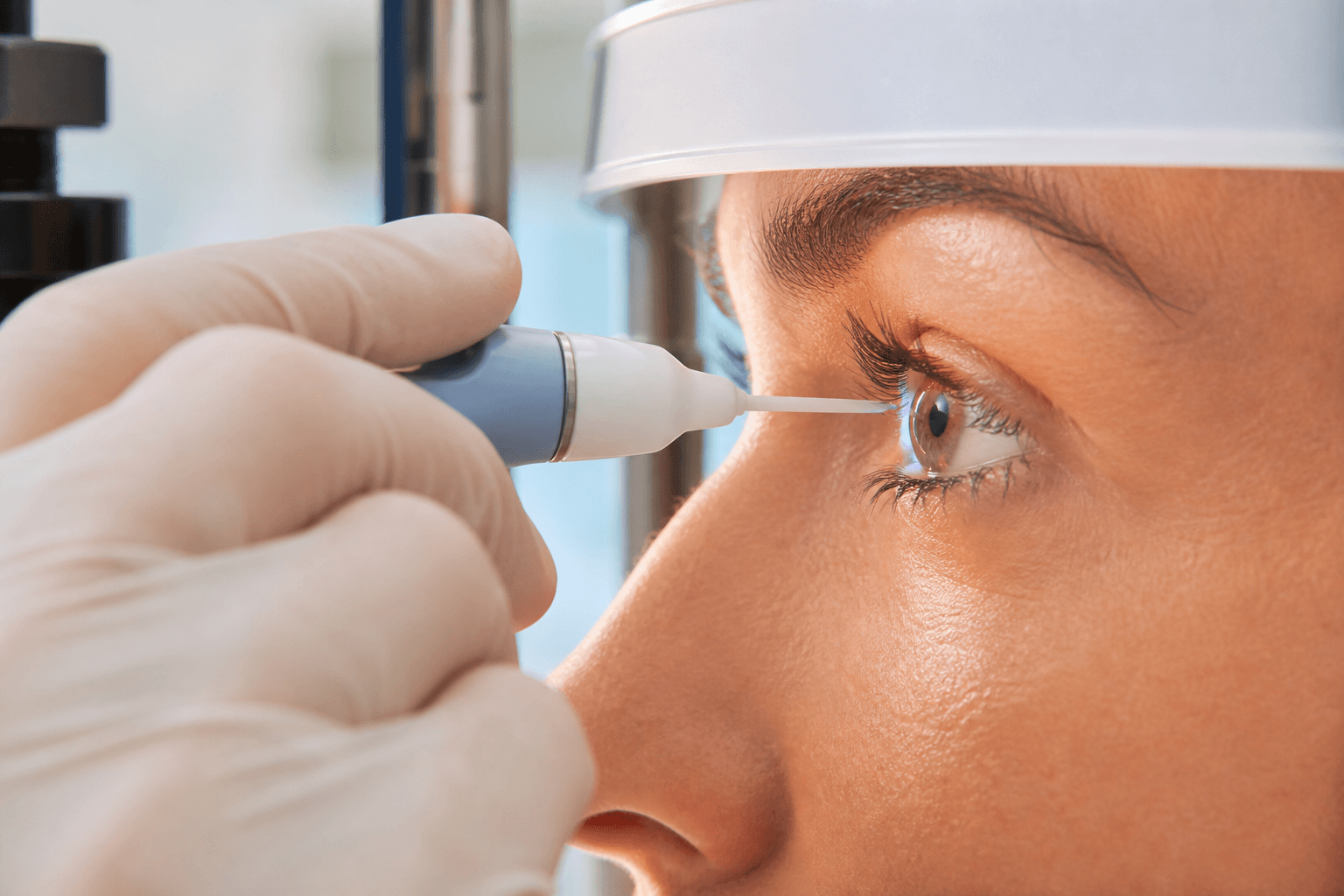
Glaucoma Treatment
Stop the Silent Thief of Sight
Glaucoma damages the optic nerve — the cable that carries pictures from your eye to the brain. Early stages often have no pain and no warning.
See the difference
Why side vision matters
Glaucoma often steals the edges of your sight first — quietly. Imagine a photo with the borders slowly fading. That is why early checks save vision.

Full, clear view
You see the centre and the sides — walking, driving, and reading feel safe and natural.
Tunnel vision
Side vision shrinks. The centre may still look okay — until it is too late. Lost optic-nerve fibres cannot grow back.
Easy science
Think of your eye like a soft ball
Inside the eye, fluid comes in and drains out — like a sink with a tap and a drain. If the drain is slow, pressure rises. That pressure can hurt the optic nerve (the cable that sends pictures to the brain).
We measure pressure
A quick, gentle test — usually done with soft air or a light touch tip.
We scan the nerve
OCT shows if nerve fibres are thinning — even before you notice blur.
We map side vision
A field test draws a map of what you can see at the edges.
We protect what remains
Drops, laser, or surgery — chosen for your stage — to keep pressure safe.
Silent thief of sight
No pain in early stages — regular checks are your best shield.
Who needs a glaucoma check?
If any of these sound like you — book today
Age 40+
Risk rises with age — even if your eyes feel fine.
Family history
Parent or sibling with glaucoma? Check sooner.
Diabetes / steroids
These can raise eye pressure over time.
Sudden pain + nausea
This can be an emergency — call us at once.
Understand in 3 easy steps
Written in simple words — so anyone in the family can understand.
What is it?
Glaucoma damages the optic nerve — the cable that carries pictures from your eye to the brain. Early stages often have no pain and no warning.
How does it feel?
Side vision may slowly shrink. Some people only notice when reading, walking, or driving feels harder. Sudden pain with nausea is an emergency — call us at once.
How do we fix it?
We measure eye pressure, scan the optic nerve, and test side vision. Then we protect what remains with drops, laser, or surgery — matched to your stage.
Protect the vision you still have — with early, gentle glaucoma care
Why patients choose this care
- ✓Early checks catch glaucoma before vision is lost
- ✓Lost optic-nerve fibres cannot grow back — so we act early
- ✓Gentle pressure tests, OCT nerve scans & field maps
- ✓Drops, SLT laser, or surgery based on your needs
- ✓Clear lifelong plan with regular follow-up
Warning signs to watch
If you notice these, book a check-up. Catching problems early makes treatment easier.
How we check your eyes
Simple tests — explained before we start — so you always know what we are looking for.
Pressure check (tonometry)
OCT scan of the optic nerve
Visual field test for side vision
Angle check (gonioscopy)
Cornea thickness measurement
Treatment options (easy to compare)
We match care to your stage — from medicines to advanced surgery.
Eye drops
Daily drops lower pressure and are often the first step.
SLT laser
A quick clinic laser that helps drainage; can be repeated in some cases.
Trabeculectomy
Surgery that creates a new drainage path when drops and laser are not enough.
Drainage devices
Small tubes for harder or advanced pressure control.
Recovery — what to expect
Laser procedures usually allow same-day return to light activity. Surgical recovery takes 1–2 weeks or more. Lifelong follow-up is essential because glaucoma is monitored, not “cured.”
Common questions (simple answers)
Protect your remaining vision
Book a glaucoma risk assessment — especially if you are over 40.
33, Swastik Ambika Tower, Near HDFC Bank, New Baradwari, Jamshedpur · +91 70910 90014 / +91 70910 90016