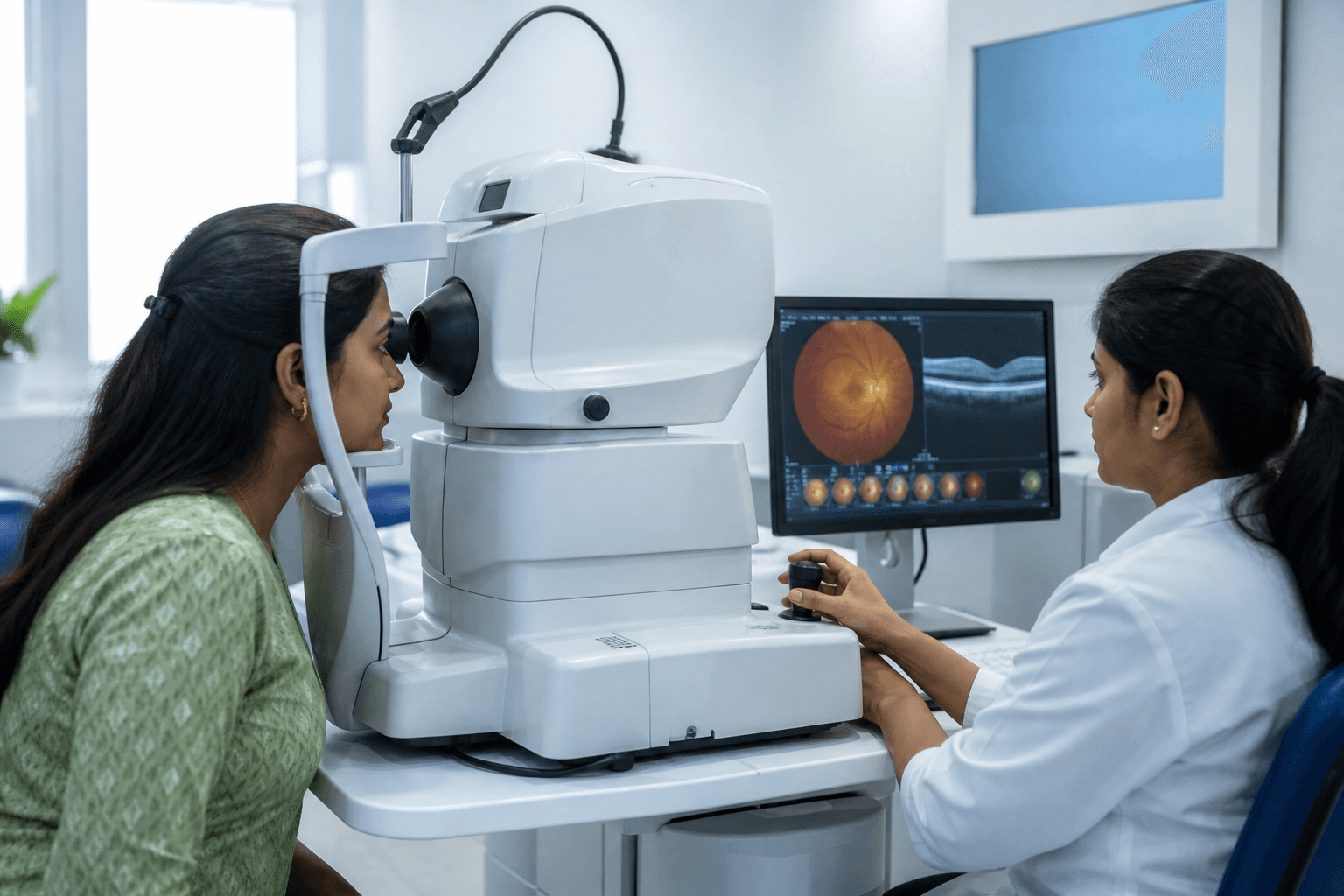
Medical Retina Services
Protect the Camera of Your Eye
The retina is like the camera film at the back of your eye. It turns light into pictures for the brain.
See the difference
Easy visual understanding
Clear pictures and simple words — so the whole family can understand medical retina services.

Stable, usable vision
Early treatment helps keep the “camera film” healthy and working.
Floaters, flashes, curtain
These can mean a tear or detachment — do not wait for it to “settle”.
Easy science
Think of the film inside a camera
If the film is damaged, no camera body can create a clear photo. The retina is that film. Diabetes, tears, or detachment can harm it quickly — early care protects sight.
Dilated retina check
We look at the back of the eye in detail after gentle dilating drops.
OCT / imaging
Scans show layers and swelling that the naked eye cannot see.
Targeted treatment
Laser, injections, or microsurgery — chosen for your exact finding.
Protect & follow up
Especially important if you have diabetes or sudden new symptoms.
EARLY CHECK · PRECISE CARE · SIGHT SAVING
Protect the Camera of Your Eye
Who should book a check?
If this sounds like you — come early
Sudden floaters
New spots, cobwebs, or flashes need same-day advice.
Dark curtain
A shadow rising over vision is an emergency.
Diabetes
Yearly retina checks even if vision feels fine.
Sudden distortion
Straight lines looking wavy need macular evaluation.
Understand in 3 easy steps
Written in simple words — so anyone in the family can understand.
What is it?
The retina is like the camera film at the back of your eye. It turns light into pictures for the brain.
How does it feel?
New floaters, flashes, a dark curtain, sudden blur, or diabetes-related vision changes need urgent attention.
How do we fix it?
We use detailed scans (like OCT), then treat with laser, injections, or microsurgery — chosen for your exact problem.
Early retina care protects the sight you still have
Why patients choose this care
- ✓Urgent care for flashes, floaters & curtains
- ✓Special care for diabetic eye disease
- ✓Advanced imaging to see retinal layers clearly
- ✓Laser, injections, or surgery when needed
Warning signs to watch
If you notice these, book a check-up. Catching problems early makes treatment easier.
How we check your eyes
Simple tests — explained before we start — so you always know what we are looking for.
Dilated look at the back of the eye
OCT scan of retinal layers
Fluorescein angiography when vessel detail is needed
Ultrasound if the view is cloudy
Special OCT vessel scan in selected macular cases
Treatment options (easy to compare)
We match care to your stage — from medicines to advanced surgery.
Anti-VEGF injections
Medicine injected into the eye to control swelling and abnormal vessels.
Retinal laser
Laser to seal leaks or reduce high-risk diabetic changes.
Vitrectomy
Microsurgery to repair detachment, clear blood, or treat complex retina problems.
Scleral buckling
Surgical support for selected retinal detachments.
Recovery — what to expect
Injections and laser usually have minimal downtime. After retinal surgery, recovery may take 2–4 weeks with posture or activity restrictions as advised. Ongoing monitoring is critical for diabetes.
Common questions (simple answers)
Book your eye check-up today
Diabetic or seeing floaters/flashes? Book a retina check now.
33, Swastik Ambika Tower, Near HDFC Bank, New Baradwari, Jamshedpur · +91 70910 90014 / +91 70910 90016