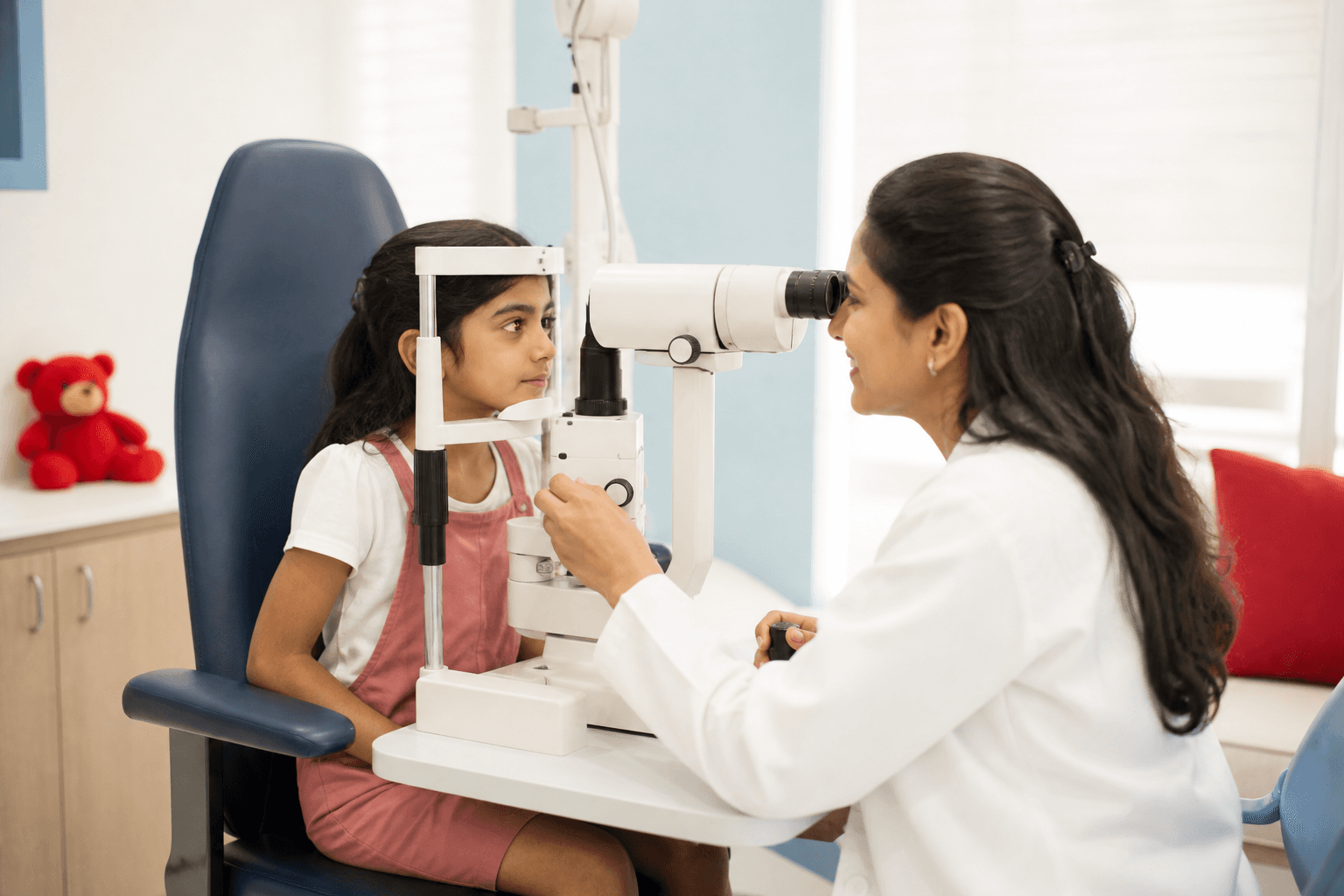
Pediatric Eye Care
Healthy Eyes for Growing Children
A child’s brain is still learning to see. If one eye is weak, turned, or needs glasses, early care can permanently improve vision.
See the difference
Easy visual understanding
Clear pictures and simple words — so the whole family can understand pediatric eye care.
Confident learning & play
Clear vision supports school, sports, and confidence.
Lazy eye risk
Waiting too long can make permanent improvement harder.
Easy science
Think of a brain still learning to see
In childhood, the brain practices seeing. If one eye sends a weak picture, the brain may ignore it. Early glasses or patching can retrain the brain while it is still flexible.
Gentle age-right tests
We check vision in a calm, child-friendly way.
Glasses when needed
Clear focus helps learning and stops lazy-eye risk.
Patching / therapy
Strengthens the weaker eye during the critical window.
Surgery only if needed
Squint or other procedures are planned carefully with parents.
GENTLE · EARLY · CHILD-FRIENDLY
Healthy Eyes for Growing Children
Who should book a check?
If this sounds like you — come early
Before school
A vision check helps learning readiness.
Eye turning
Any squint needs early evaluation.
Sitting too close
Books or screens held very near can be a clue.
Family concern
If teachers notice board difficulty, book a check.
Understand in 3 easy steps
Written in simple words — so anyone in the family can understand.
What is it?
A child’s brain is still learning to see. If one eye is weak, turned, or needs glasses, early care can permanently improve vision.
How does it feel?
Sitting too close to books, head tilting, squinting, school board difficulty, or an eye that turns are common clues.
How do we fix it?
We check vision gently, give glasses when needed, start patching for lazy eye, and operate only if necessary — while the visual system can still improve.
Amblyopia, squint, glasses & school vision screening — gentle care while vision is still developing
Why patients choose this care
- ✓Child-friendly examinations
- ✓Glasses & patching explained simply for parents
- ✓Squint and lazy-eye care at the right age
- ✓School-readiness vision screening
Warning signs to watch
If you notice these, book a check-up. Catching problems early makes treatment easier.
How we check your eyes
Simple tests — explained before we start — so you always know what we are looking for.
Age-appropriate vision testing
Special refraction for true power in children
Squint and both-eyes-together assessment
Dilated retina check when needed
Treatment options (easy to compare)
We match care to your stage — from medicines to advanced surgery.
Glasses
Often the first and most important step for clear focused vision.
Patching / lazy-eye therapy
Strengthens the weaker eye while the brain can still learn.
Vision therapy
Guided exercises for tracking, focusing, and using both eyes together.
Pediatric eye surgery
Squint correction or other procedures under specialist care when needed.
Recovery — what to expect
Glasses help immediately. Patching needs consistency over months. After surgery, recovery is usually 1–2 weeks with scheduled follow-ups through childhood.
Common questions (simple answers)
Book your eye check-up today
Book a pediatric eye screening for your child.
33, Swastik Ambika Tower, Near HDFC Bank, New Baradwari, Jamshedpur · +91 70910 90014 / +91 70910 90016